
You built the site. You told your family. You posted once. Google still does not show you for the searches that bring work. That is the usual panic around week four. I have had that call enough times that I can hear it before the person finishes the sentence. They did the hard part. The site is live. Then they typed their service and their suburb, and someone else came up first.
People find a business they did not already know on search or on social. This is the search half: what we do on our site and on client sites, in the order it actually works. It is not a secret. It is a sequence. If you skip the first part and wait for Google to “pick you up”, you can sit with a finished site and no enquiries for months.
The short version is this. Use ads while nobody knows you. Use SEO so you can stop paying for the terms you win. Build the site so both of those jobs are possible. The service pages are SEO and online ads. The working version, the one we actually run, is below.
Why you should use Google Advertising:
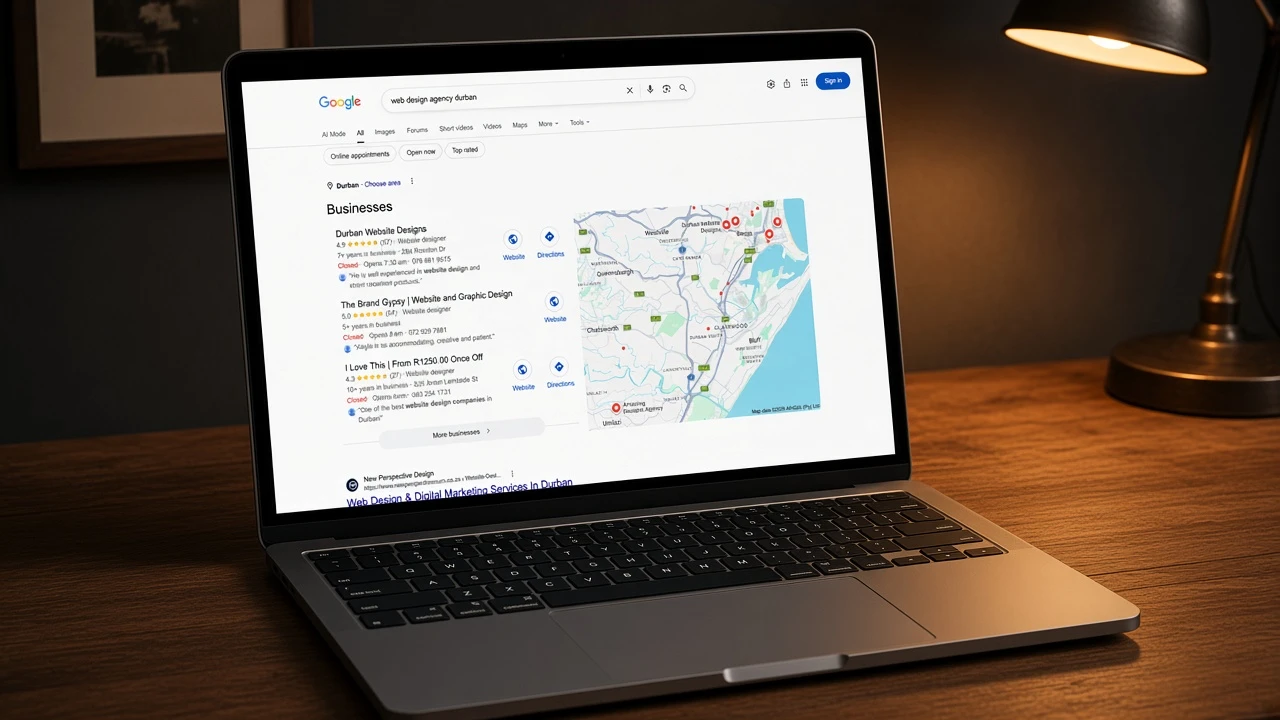
A new site has no history. Google has no reason to put you above businesses that have been collecting reviews and links for years. Search “web design agency Durban” and you will see the map results and a long list of people who got there first. Waiting six months to “see how organic goes” is how you pay for a finished site with no enquiries, then start to wonder if the site itself was a waste.
Ads put you at the top for the terms you choose, from the week the site is live. That is the job. Not branding videos. Not boosting a Facebook post and calling it advertising. Search ads, on the words people type when they are ready to phone. You are paying to stand in the same line as the businesses that already ranked, until your own pages have earned a place there.
Pick five phrases a paying customer would type: the service and the suburb. Not your company name. They already find that if they know you. Set a monthly cap you can afford while you learn, because the first month is always a bit messy. Send the click to the page that matches the phrase, not the homepage every time. If someone searched for a specific service, the homepage makes them work to find it, and they will bounce.
Google Advertising in the long-term:

If you leave ads on forever, on every term, you pay for clicks you could have owned. That is the part people miss when they either love ads or hate them. Ads are not a personality. They are a tap. Once a page sits on page one for a phrase, that phrase should come out of the campaign. Urban Tribes Conference ranking on its own name is the kind of term you stop bidding on. Keep the budget for the searches you have not won, or for a competitor’s name if that is a deliberate choice.
Ads do not disappear in year two. The mix changes. You spend less on the easy words and more on the ones that still cost money. You also use ads when you launch a page that has not earned trust yet, because a new service page is in the same position your whole site was in on week four: finished, and invisible.
Once a month, compare Search Console queries to the ad account. If you are in positions 1 to 3 and the ad is still on, pause that exact term. Put the money on the next phrase. That meeting is boring and it is where the profit is.
In the long-term SEO is the main focus:
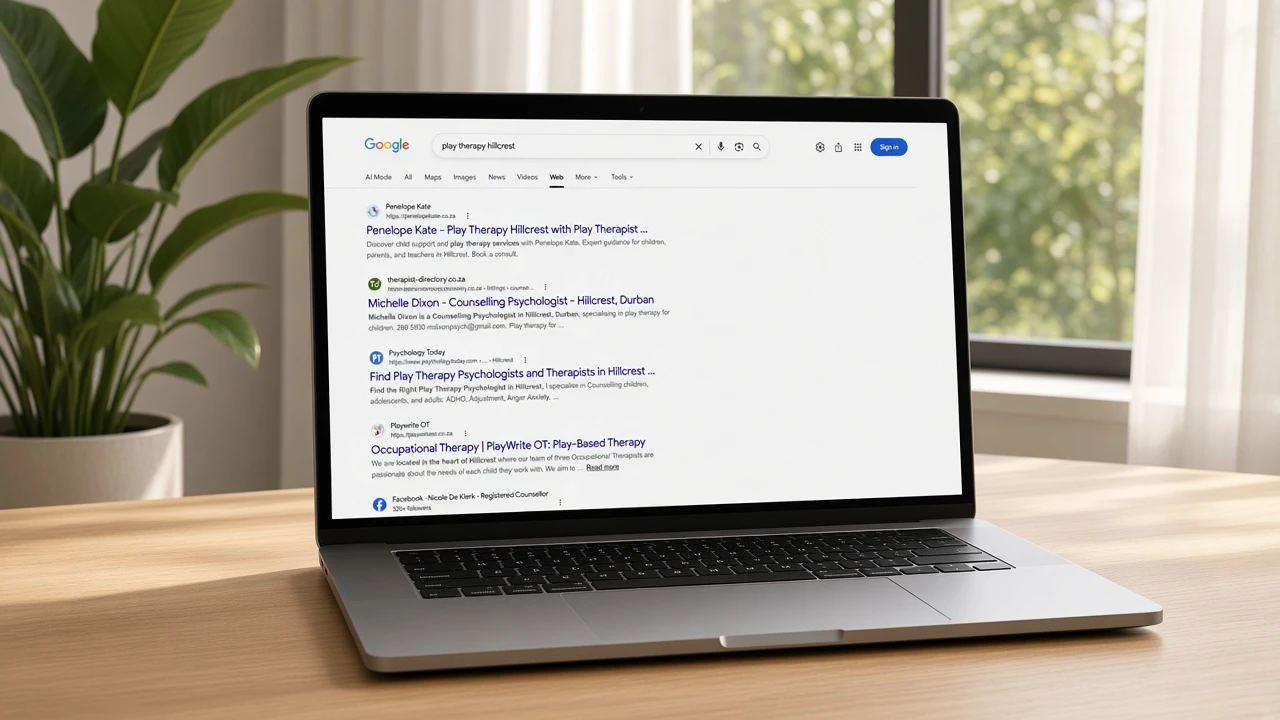
Ads buy the slot. SEO is the work that makes the page deserve it. Titles, descriptions, headings, and pages that answer one search each. Penelope Kate at number one for play therapy Hillcrest is the outcome: the page is about that work, in that place, and Google has enough to show it. We did not get there by hoping. We got there by making the page match the words a parent would type.
That does not happen in a week, and I will not tell you it does. It happens when the site keeps getting clearer and you stop publishing filler. When the organic listing is stable, you cut the ad on that term and keep the margin. That is the point of doing both. Ads keep the phone ringing while SEO is still catching up. SEO is how you stop renting every click.
Give each service its own page. Do not make the homepage try to rank for five services in five suburbs. Name the suburb the way customers say it. If people search Hillcrest and your page only says “greater Durban area”, you have made Google guess, and it will guess someone else.
Onsite SEO:
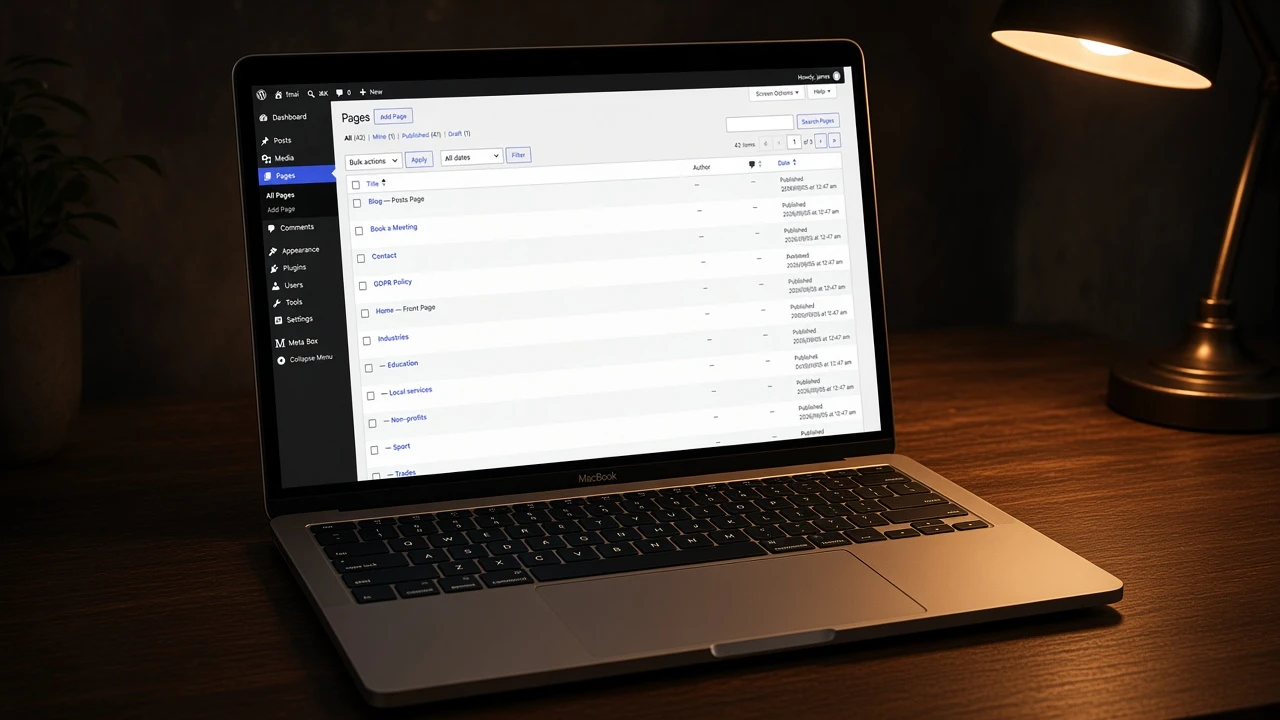
People buy a site, never open the SEO plugin, and then blame Google. I understand the frustration. Onsite SEO is the part you control without asking anyone for a link. It lives in the same place you edit Pages: titles, the first heading, the words on the page. If you cannot log in, you cannot do this work, which is why the CMS from the five things post comes first.
Do this on every important page. It is not glamorous. It is the difference between a site that looks finished and a site Google can actually use.
- One H1. It should sound like the search, not like a slogan.
- H2s for the sections a person would scan. Not “Welcome” and “About us” on a service page.
- A title tag and meta description you wrote, not the default page name. We still use Yoast for that.
- Images sized for the web. A homepage image should not be a 4MB upload. Add alt text that describes the photo.
- A cache plugin so the page is not slow. On WordPress we still point people at WP Rocket.
If you cannot log into Pages, you cannot do onsite SEO. Fix the login first. Then do the list above on the homepage and the two service pages that bring the most calls. The rest can follow once those are clean.
Building up organic links:
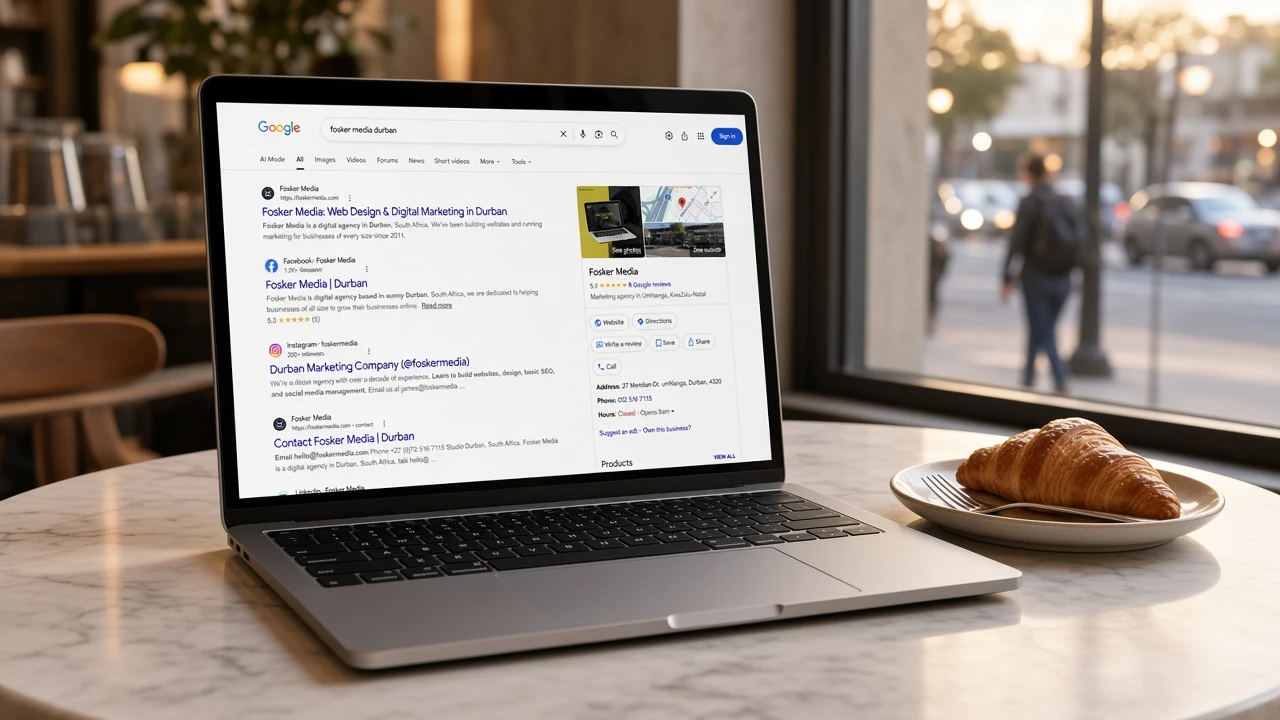
Google treats a link from another site like a vote. You cannot fake a hundred of them in a week without looking like spam, and you will spend the next year cleaning that up if you try. You can collect the obvious ones. Search for us and you will see the site, Facebook, Instagram, and the Business Profile. Those are links and listings working together. That is the starting set, not a trick, and it is the same work as the promote list.
What to do, in the order we actually do it:
- Finish Google Business and the social profiles with the same URL.
- Ask partners, venues and suppliers to use the new domain on any page that already names you.
- Put a share button on posts you actually want shared. Do not add fifteen networks. Add the two your customers use.
- If you build sites for other people, a small credit in the footer is still a normal way to earn a link. Do not hide it. Do not make it the only plan.
Do not buy a bundle of “SEO backlinks”. The email will promise page one in thirty days. What you get is a list of sites that exist to sell links, and Google is better at spotting that than the person who sold you the package.
Ads to get seen. Onsite work so the page is fit to rank. Listings and a few honest links so Google can see other people point at you. That is the strategy, and it is the same sequence whether the site is ours or a client’s. If you want us to run the ad account or the SEO, say what you sell and where. We will tell you which part to start with, instead of selling you everything at once.