
The more businesses I talk to lately, the more I hear the same thing: social is not working. They have the Facebook page. They have Instagram. They posted for a few weeks after someone set the accounts up, then it went quiet, so they either stop completely or they start pushing harder with sales. My first question is always the same. What are you actually sharing?
Nine times out of ten the answer is a price, a special, or a photo of the product with “DM us” written across it. I understand why. Sales are the point of a business. Without them you cannot pay staff or keep the lights on, and nobody starts a page because they want to be a publisher. The mistake is treating Instagram and Facebook like a shop counter. People do not open those apps to be sold to. They open them to see friends, to laugh, and to keep up with people they already trust.
You already know how this feels from the other side. Think about the last time an insurance company cold-called you. You put the phone down, or you were polite for ten seconds and then hung up, because you knew they wanted a sale before they wanted you. We forget that feeling the moment we sit down to write a caption. We become the insurance call, and then we wonder why the comments are empty.
Your customers are on social for the same reason you are when you are not working: to connect with people. If the first ten posts they see from you are a pitch, they mute you the same way they mute that call. The real job on social is to build a community around the business. Selling still happens. It just cannot be the only thing you do.
Why you should build a community
When people feel they belong around a business, something changes. They start to trust you. They come back without a discount. They tell a friend without being asked. That is what people mean when they talk about a brand, and it lasts a lot longer than a weekend sale, which is gone by Monday and forgotten by Wednesday.
You can see it in the arguments people have about Apple and Android. Nobody is having that fight because a banner ad told them to. They feel they belong to one of those companies. I am not asking you to become Apple. I am asking you to stop using the feed only to take money, and to give people a reason to stay before you ask them to buy.
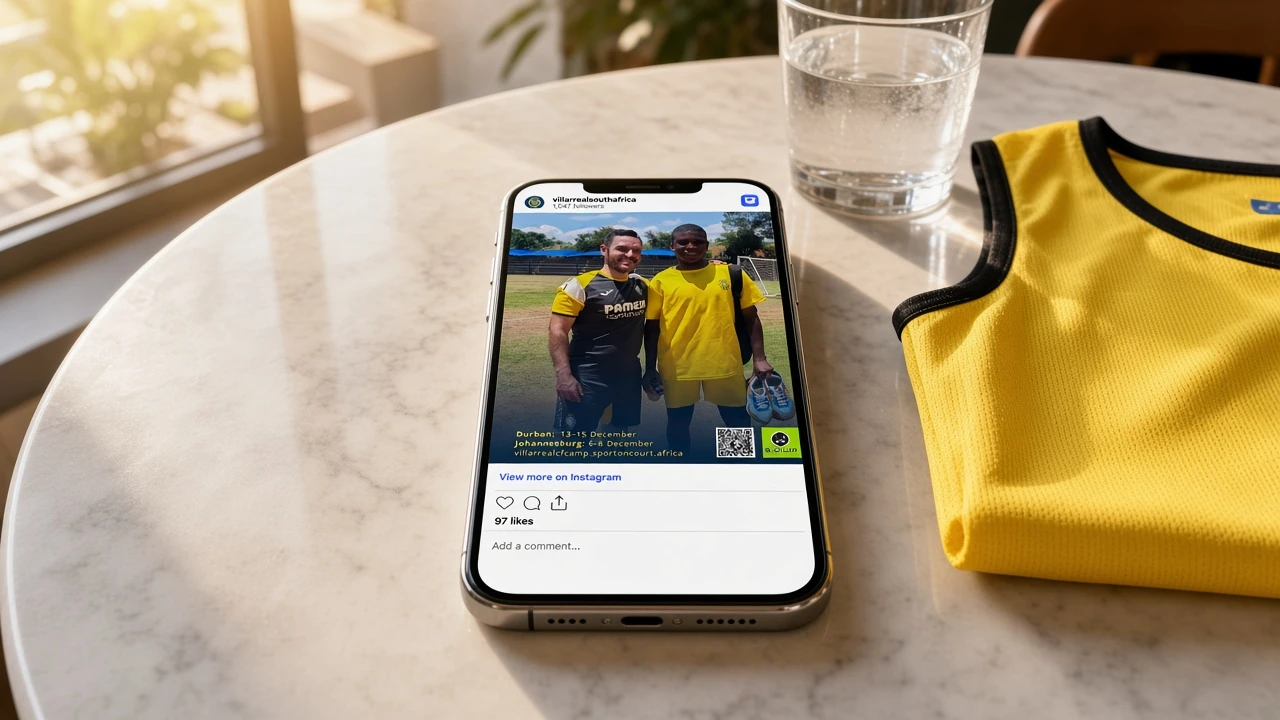
Villarreal CF Camp SA is a good example of what that looks like in real life. The post is not “book now, limited spaces, DM us”. It shows the coaches on the pitch, the dates in Durban and Johannesburg, and the website. A parent who cares about the camp can save it, send it to another parent, and actually use it. That is useful. A graphic that only says “20% off this weekend” gives them nothing to pass on except a price, and prices get ignored.
You can still sell on social. I am not against a clear offer. The rule is simple: do not make the sale the only thing you post. If nine posts out of ten are a pitch, you do not have a community. You have a catalogue that nobody asked to subscribe to.
How to build community
You build a community by sharing things people can read, use, or see themselves in. That sounds vague until you watch what happens when you do it every week. The same names start to like the posts. Then they comment. Then they send the post to someone else. That is a community starting. A follower count is not. You can buy followers. You cannot buy the person who watches a video because it answered a question they already had.
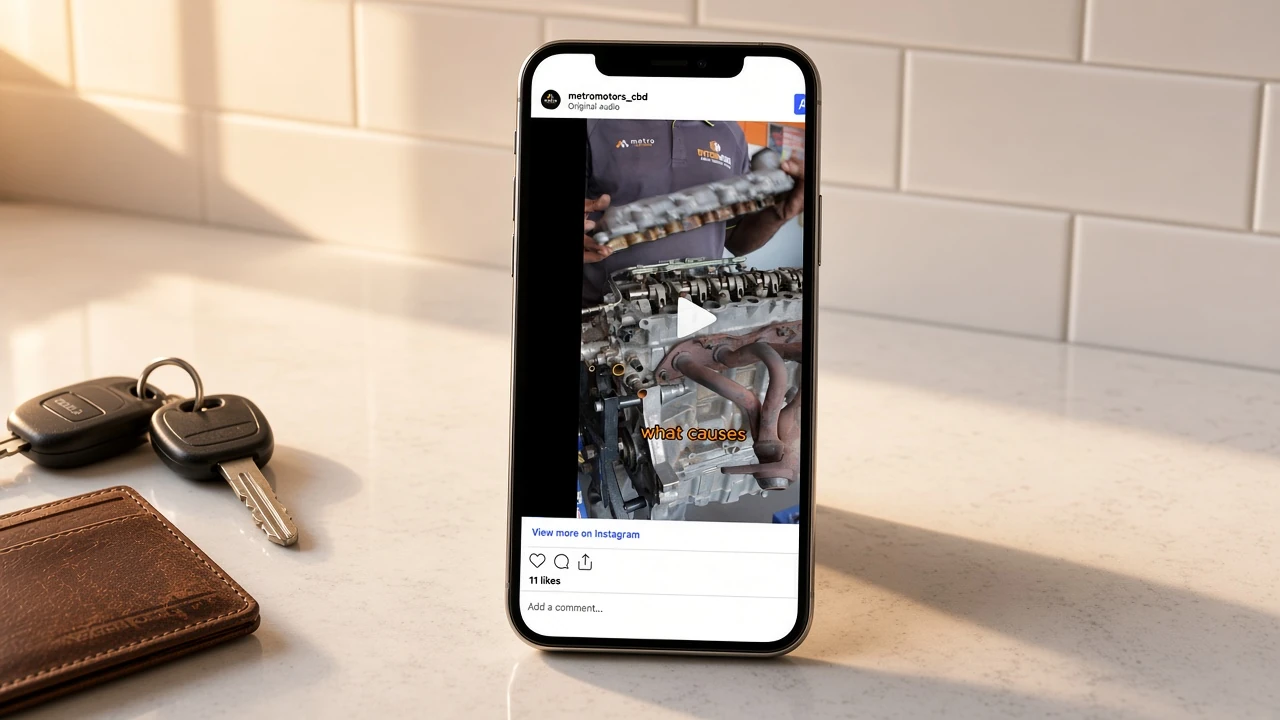
Metro Motors CBD posts the actual work. There is an engine on the bench, and a caption that starts a question: what causes this? That is a tip, filmed in the workshop they already work in. Someone who owns a car will watch it, even if they are not ready to book a service today. Someone who only sees “finance available, DM us” will keep scrolling, because they have seen that caption on fifty other pages this week.
The content does not have to be expensive. It has to be true to the work. If you are a plumber, film the leak you just fixed and talk through why it happened. If you are a salon, show the cut, not only the price list. If you sit in an office, write down the question you answered on the phone this morning and turn that into a post. The week you are too busy to invent content is usually the week the work itself gave you something to share.
Types of content you can share
There are a lot of formats, and you do not need all of them. These are the ones we come back to with clients because they are easy to keep going once you have started.
- Quotes that sound like you, not a poster downloaded from the internet
- Memes, if they fit your kind of customer and you would actually send them to a friend
- Your own blog posts, once you have written something useful on your site
- Links to other people’s work, when someone else explained a thing well
- Tips and advice from jobs you already did this week
- Video of the actual work, even if it is filmed on a phone
The easiest place to start is other people’s work, because you do not have to write a thousand words before you post. Then, when you are ready, you write your own. I will come back to both of those.
Check this week:
- Open your last nine posts. How many are only trying to sell?
- Write one post that teaches something, or share someone else’s useful article.
- Check that your bio has the live website, not an old Facebook page. Put the URL where people already look.
Start with other people’s work
The easiest post is a link or a tag. Share an article from someone you already follow, or a photo of a place your customers already go, as long as it relates to your work. You do not have to be the expert in every post. Sometimes you are just the person who found something useful and passed it on. That is how a lot of communities start: one person keeps showing up with things worth looking at.
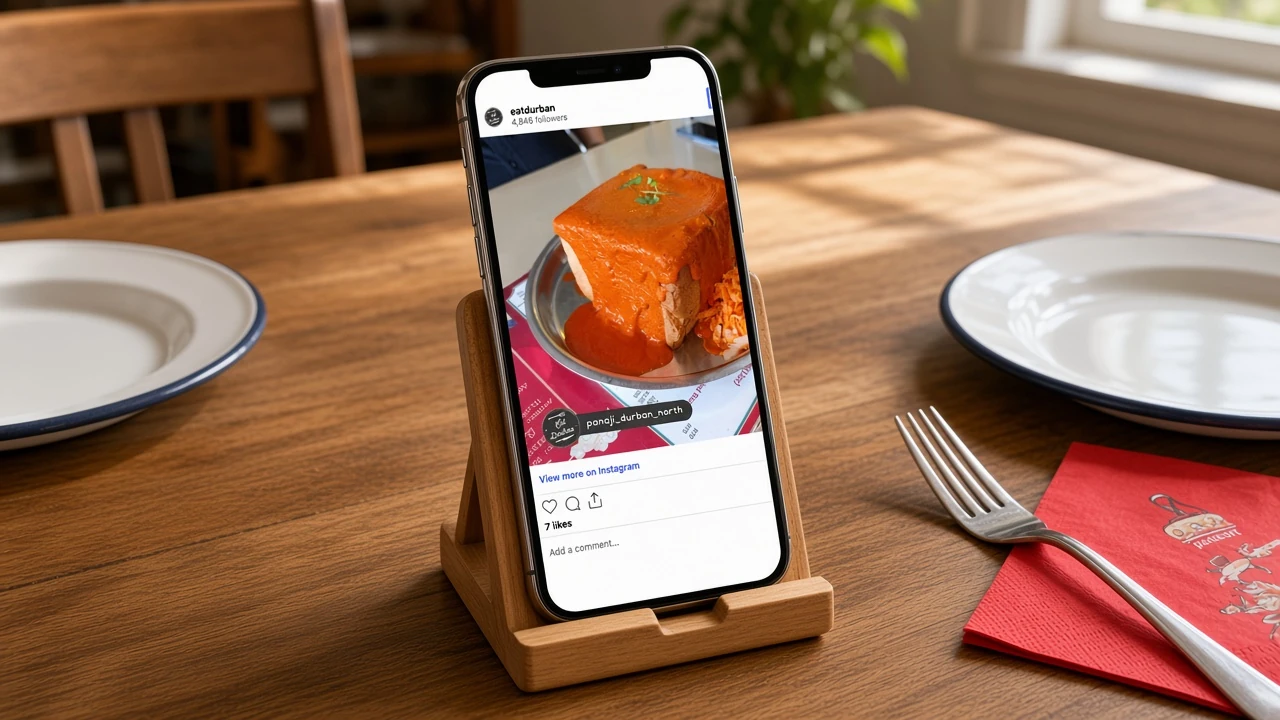
Eat Durban does this in the feed. They post a bunny chow, tag the restaurant, and they do not ask anyone to DM for a special. The post is about the food and the place. People who care about eating in Durban have a reason to stay. Sean Clarence’s Facebook does the same job in a different industry. He shares links and the odd meme for people who already care about money advice. He is not the hero of every post. He is the person who found the useful thing and put it in front of the right room.
You can copy that this week without a studio and without a content calendar that takes three hours to build. Open the sites you already read for your work. If an article would help your customers, share it with one sentence in your own words about why you are sharing it. Tag the place or the person if that is honest. Then go back to work. That is enough for a start.
Then write your own
Sharing other people’s work gets you posting. Writing your own is what lasts. A blog post on your website is still there in a year. A Facebook post is gone by Thursday. The article shows you know the work, it gives Google a page to rank, and then you share that page once on social so the people who already follow you can read it.
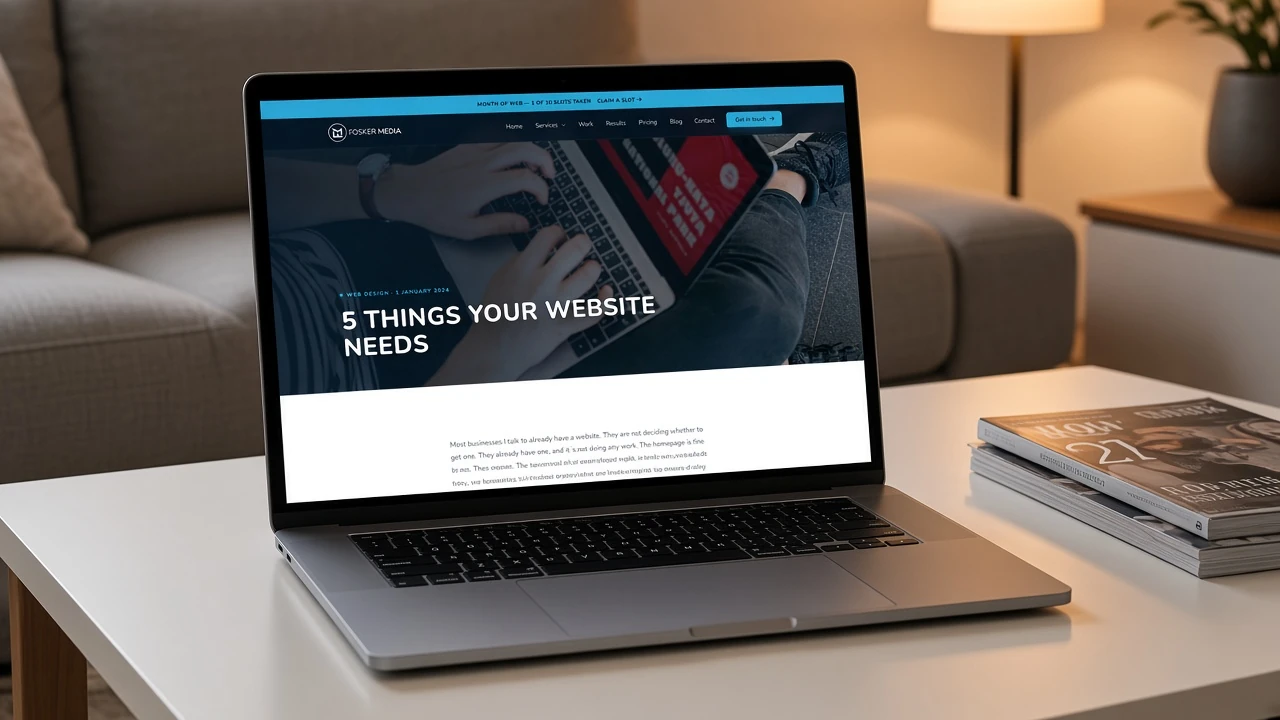
We do that here. Five things your website needs is a useful article first. It walks through the login, the testimonials, the phone layout, the blog, and ranking. The request for a quote sits at the end, after the reader has already been helped. That is the order on purpose. If we opened with a price, most people would leave before they got to the part that would have made them trust us.
Giving advice away can feel risky. I have had that conversation with owners who are sure that if they explain the work, nobody will pay them to do it. Here is what actually happens. There are millions of people on the internet. A few will take the advice and do it themselves. Most do not have the time, and because they liked how you explained it, they get in touch so they can hire you. Gary Vee still puts it in three words: give, give, then ask.
This will not happen in a week, and I do not want to pretend it will. If the feed has been quiet for two years, one sale post will not fix it. If you start sharing useful things, and you keep doing it when work is busy, the same people start to come back. Post the useful thing first. Sell after people already know you.
I am not against selling online. I am against making it the only thing you do. If you want us to look at last month’s posts and tell you what we would change, that is our social media work. Or send us the page and we will look at it with you.